Mostrando postagens com marcador Biotecnología. Mostrar todas as postagens

quarta-feira, dezembro 29, 2021

PARLAMENTO EUROPEO: Consulta pública sobre la legislación relativa a plantas producidas por determinadas nuevas técnicas genómicas


• 22 de noviembre de 2021 - Claudia Gamon y Jan Huitema – [P-005228/2021] - Tema: Consulta pública sobre la legislación relativa a plantas producidas por determinadas nuevas técnicas genómicas[1]


Basándose en las conclusiones de su estudio, la Comisión propone la adopción de una legislación sobre plantas producidas mediante determinadas nuevas técnicas genómicas (NGT). Entre el 24 de septiembre y el 22 de octubre de 2021 se realizó una consulta pública online. Los Verdes / EFA y varias organizaciones alimentarias internacionales llevaron a cabo una campaña eficaz mediante formularios precompletados utilizando la aplicación ‘Proca’[2]. Se enviaron 70.894 comentarios en total[3].


1. ¿Conoce la Comisión el uso de presentaciones estándar automatizadas en este proceso de consulta pública, específicamente a través de aplicaciones como ‘Proca’ que permiten a los participantes enviar más de una respuesta a la página de comentarios de la consulta pública?


2. ¿Cree que puede resultar una imagen distorsionada debido al uso de presentaciones estándar y, de no ser así, por qué no?


3. ¿Puede indicar cómo utilizará los resultados de esta campaña en el análisis que conducirá a recomendaciones sobre legislación para plantas producidas por NGT, y cómo garantizará que los resultados no se vean afectados negativamente por respuestas unilaterales como estas?


Respuesta de la Sra. Kyriakides en nombre de la Comisión Europea (20 de diciembre de 2021):


«1. En el curso de la recepción de los comentarios sobre la evaluación de impacto inicial de la legislación sobre plantas producidas mediante determinadas técnicas genómicas nuevas, la Comisión recibió 70.894 respuestas, de las cuales el 98% se identificaron como procedentes de campañas[4]. En el sitio web del grupo Verdes / Alianza Libre Europea (ALE) del Parlamento Europeo se puso a disposición una plantilla de respuesta precompilada y modificable por el usuario; también se publicaron plantillas similares en los sitios web de organizaciones no gubernamentales.


2. De acuerdo con las orientaciones para la mejora de la legislación, la Comisión comprueba sistemáticamente si las contribuciones se crean artificialmente o si las respuestas proceden de campañas. Las respuestas de la campaña se consultarán y analizarán por separado de las respuestas individuales que no pertenecen a la campaña. El análisis de la retroalimentación está actualmente en curso.


3. La Comisión está plenamente comprometida a recopilar las opiniones de todos los interesados, informar de forma transparente sobre los resultados de las actividades de consulta y sobre cómo se utilizan las contribuciones en el proceso de formulación de políticas. Las aportaciones de los ciudadanos, las empresas y la sociedad civil se publican en el informe de evaluación de impacto, junto con explicaciones sobre cómo se tiene en cuenta esta información.».


[1] Traducción no oficial; lenguas originales: alemán y holandés.


[2] https://proca.app/


[3] https://schillipaeppa.net/2021/10/21/demokratie-sabotiert/


[4] https://ec.europa.eu/info/sites/default/files/br_toolbox_-_nov_2021_-_chapter_7.pdf


domingo, abril 12, 2020

Biotecnología [Biotechnology]


Noel Courage, “Biotech Salmon Show that Companies Need to be Innovative Not Just to Invent a Product, but also to Get Regulatory Approval and Market Acceptance”. B&P (2020) [Blog Source_bereskinparr/com.doc/ - available on the Internet at <https://www.bereskinparr.com//doc/biotech-salmon-show-that-companies-need-to-be-innovative-not-just-to-invent-a-product-but-also-to-ge> (last accessed on 31 March 2020)].


Dennis Eriksson et al., “Options to Reform the European Union Legislation on GMOs: Post-authorization and Beyond”. Trends in Biotechnology (2020) doi.org/10.1016/j.tibtech.2019.12.015 [available on the Internet at <https://www.cell.com/action/showPdf?pii=S0167-7799%2819%2930310-5> (last accessed on 20 February 2020)].

Abstract
We discuss options to reform the EU genetically modified organism (GMO) regulatory framework, make risk assessment and decision-making more consistent with scientific principles, and lay the groundwork for international coherence. In this third of three articles, we focus on labeling and coexistence as well as discuss the political reality and potential ways forward.


Lynn L. Bergeson, “USDA Requests Comments On Its Draft Instructions On Testing Methods For BE Foods”. The Biobased and Renewable Products Advocacy Group - BRAG (2020) [Blog Source_braginfo/org.en - available on the Internet at <http://blog.braginfo.org/entry/usda-requests-comments-on-its-draft-instructions-on-testing-methods-for-be#page=1> (last accessed on 11 February 2020)].


Nupur Mondal and Seema Talwar, “Role of Agricultural Biotechnology to Mitigate Climate Change”. Journal of Energy Research and Environmental Technology (JERET), Vol. 6 No. 1 (2019) 65-66 [available on the Internet at <https://www.krishisanskriti.org/vol_image/10Jul2019080705144%20%20%20%20%20%20Nupur%20Mondal%20%20%20%2065-66.pdf> (last accessed on 10 February 2020)].

Abstract
Climate change is one of the biggest challenges of twenty-first century as it is not only going to affect humankind directly, but by affecting the different regions of the globe differently, it will cause changes in agricultural ecosystems. Developing countries having tropical climate will be more severely affected as increasing temperature and drought conditions will increase the demand for water. A slight increase in temperature will affect the yields of crops in colder temperate regions as well. Grains and oilseeds will mature faster whereas, in horticulture, tomatoes, onions and fruits might be produced of low quality because of climate change. Developing countries which are densely populated, are going to be adversely affected and would experience severe food insecurity. Agriculture is one sector which not only causes climate change itself, but is also affected in worst way by climate change. There is an increased demand for use of biotechnological tools to help crops adapt to the various climatic changes which will not only help these crops to survive in adverse conditions but will also save humankind from severe food insecurity.

W

sexta-feira, julho 12, 2019

USA - Meatless Meat Update


terça-feira, julho 02, 2019

To BE or not to BE a GMO (UPDATED)


On June 11, 2019, President Trump signed an executive order directing the Food and Drug Administration (FDA), Environmental Protection Agency (EPA), and United States Department of Agriculture (USDA) to ease rules for approving new genetically modified crops and other agriculture products. Couple this with, as we noted in a previous update, the USDA’s current approach which allows developers who use certain gene editing techniques to get their products to market without the lengthy process required for crops that rely on foreign DNA, and one can predict that there is going to be a significant uptick in new agriculture products with innovative traits hitting the market in the next few years. Unfortunately, the definition of what constitutes a Genetically Modified Organism (GMO) is no longer consistent among the regulators, industry and private certificate labels.
It all starts with the USDA’s new consumer labeling regulations. Starting on January 1, 2020, the USDA will require certain products that contain GMOs to have a Bioengineered (BE) label. (For additional information on BE labeling requirements, please see the Polsinelli update linked here.) While the USDA’s BE labeling requirements are rational and preferable to a patchwork of state labeling requirements, the definition of “bioengineered” under the USDA’s new BE labeling requirements are not consistent with a lay persons understanding of GMOs, the USDA’s organic standard as it relates to GMOs, the European Union’s and China’s import standards for GMOs, or private non-GMO labeling.
On December 21, 2018, the Agricultural Marketing Service (AMS) of the USDA promulgated regulations that require all organisms that contain foreign DNA to carry the BE label. Some commenters have tried to draw a distinction between “Gene-Edited” and “Genetically Modified” with the distinction that “Genetically Modified” organisms have foreign DNA and “Gene Edited” organisms use newer techniques, like CRISPR and TALENs, to edit the genetic material directly without adding foreign DNA. However, the question is, do the new gene editing techniques need to carry the BE label if they do not contain foreign DNA? Although untested, the answer appears to be no.

Calyxt’s high oleic soybean is a good case study. Calyxt used the TALEN gene editing technique to suppress the genes responsible for producing saturated fat in soybeans. Thus, soybean oil from Calyxt’s soybeans has 20% less saturated fat than normal soybean oil. The USDA and FDA have allowed Caltex to bring this innovation to market quickly. There is little doubt that these products can have a significant health benefit for the consumer and therefore the possibility to fetch a premium price.

However, at least one seed co-op marketed Calyxt’s soybean as “non-GMO.” Non-GMO is an important and profitable selling point. Non-GMO can be used as feed for organic poultry and livestock. Furthermore, non-GMO crops do not have to get the same, burdensome import approval as GMO varieties.

Is it BE or not BE, and why does that matter? First and foremost, under the current USDA BE regulations, Calyxt’s soybeans probably will not be required to carry the BE label. However, Calyxt’s soybeans and byproducts cannot be labeled as organic or used as organic feed under the USDA’s Organic label – even if it is grown using organic farming techniques – because it is genetically modified according to the USDA’s organic standard. Furthermore, the EU does not distinguish between gene-editing and genetic modification. Thus, according to European Union regulations, Calyxt is a GMO soybean and, as of now, has not approved Calyxt for import.

Furthermore, many companies who purchase non-GMO products want to market them as non-GMO and affix a private certification label from organizations like the Non-GMO Project. However, the Non-GMO Project has taken the position that the Calyxt soybean, called the “TALEN soybean, is genetically modified and cannot qualify for the non-GMO label.

What could possibly go wrong? Considering genetically modified traits–developed by relatively new companies–are now on the market, there is an elevated business risk from these new traits. All parties, from innovators to food companies, should take a proactive approach in dealing with this issue. Companies can use audits, contracting, insurance, monitoring and stewardship programs to help avoid potentially catastrophic liability.

linkedin.com/in/william-curtis-9a44b25


quinta-feira, maio 09, 2019

Key Provisions Of USDA's Bioengineered Food Disclosure Rule

Arent Fox - https://www.arentfox.com/


On December 21, 2019, the U.S. Department of Agriculture (USDA) Agricultural Marketing Service (AMS or Agency) issued its final rule establishing a National Bioengineered (BE) Food Disclosure Standard (NBFDS). The rule implements amendments to the Agricultural Marketing Act made by Public Law 114-216 on July 29, 2016 (the Act) and follows an initial request for comment by AMS on June 28, 2017 and publication of a proposed rule on May 4, 2018. This two-part article summarizes key provisions of this new federal marketing standard, including the Agency’s approach to defining “bioengineered foods” and addressing refined ingredients, voluntary labeling, absence claims, and the applicable disclosure threshold. Part 1 discussed compliance deadlines, responsible parties, definitions, AMS’ list of bioengineered foods, and exemptions from the rule. In this Part 2, we’ll cover disclosure options, voluntary disclosure, absence claims, administrative issues, and enforcement.
Mandatory Disclosure
The rule incorporates the four disclosure options provided in the Act: text, symbol, electronic or digital link, and text message. The BE disclosure must appear on the information panel or the principal display panel of the product label, or on an alternate label panel if those panels contain insufficient space.
  1. Text Disclosure. For a BE raw agricultural commodity or an ingredient produced from that commodity, the text disclosure is “bioengineered food.” For a multi-ingredient food that contains both BE ingredients and non-BE ingredients, the text disclosure is “contains a bioengineered food ingredient.”
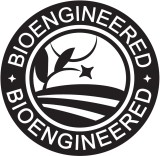
  2. Disclosure Via SymbolRegulated entities seeking to use a symbol may use a black and white or color version of the following, which includes the word “bioengineered” in an effort to provide more information to consumers in a way that is appropriate and non-disparaging:
  1. Disclosure Via Electronic/Digital LinkRegulated entities choosing to disclose BE content using the electronic or digital link option must accompany the link with the statement “Scan here for more food information” (or equivalent language that reflects technological changes) along with a telephone number and clear calling instructions, i.e., “Call [1-000-000-0000] for more food information,” in close proximity to the link. The telephone disclosure must be available at all times of the day and clearly provide BE food information to the caller. Prerecorded information is permitted. The electronic or digital link must provide the bioengineering disclosure on the first product information page accessed through the link, without any marketing and promotional information.
  2. Disclosure Via Text MessageRegulated entities that choose this option are required to include a statement on the package that instructs consumers on how to receive a text message. Those instructions can be shared or centralized among regulated entities, if so desired. Industry is not prohibited from developing a standardized instruction or response if it is in compliance with the NBFDS regulations.
The rule also provides options for disclosure in certain special cases:
  1. Additional Disclosure Options for Small Food ManufacturersAMS provides small food manufacturers, defined as a “food manufacturer with annual receipts of at least $2,500,000 but less than $10,000,000,” with two additional disclosure options for the product label: (1) a telephone number accompanied by appropriate language, e.g., “Call [1-000-000-0000] for more food information”; or (2) an Internet website address, e.g., a URL, with accompanying text, e.g., “Visit [URL of the website] for more food information.”
  2. Additional Disclosure Options for Small and Very Small Packages. For small and very small packages, defined using FDA’s labeling requirements, regulated entities can replace the statement “Scan here for more food information” associated with a link disclosure with the statement “Scan for info.” For the text message, entities can replace the statement “Text [number] for more bioengineered food information” with “Text [number] for info.” For very small packages, regulated entities may use a label’s preexisting URL or telephone number for disclosure.
  3. Disclosure for Food Sold in Bulk ContainersAMS holds retailers responsible for complying with the BE food disclosure for bulk food. The disclosure must appear on signage or other materials (stickers, bindings, etc.) on or near the bulk item. Entities can use any of the options for disclosure including text, symbol, electronic or digital link, or text message (if applicable).
In response to a comment requesting an alternative website disclosure option, AMS indicated that, while it does not have the authority to require such a disclosure, regulated entities are free to include BE disclosures on their websites.
Voluntary Disclosure
AMS agrees that voluntary BE disclosure is permissible under the Act, and the rule makes voluntary disclosure available to exempt entities and to foods in which rDNA material is not detectable but which are derived from BE crops or foods.
Entities that are otherwise exempt from the requirements of the NBFDS (very small food manufacturers, and restaurants and similar retail food establishments) may voluntarily provide disclosure of BE food that would otherwise be subject to disclosure under the NBFDS. In order to provide consistency with mandatory disclosure requirements and avoid consumer confusion, voluntary disclosure must be in one or more of the forms specified in the rule for mandatory disclosure (i.e., text, symbol, digital or electronic link, text message, or appropriate small manufacturer and small or very small package disclosure options, as applicable).
For those foods or food ingredients that (A) do not meet the definition of “bioengineered food,” (B) are not exempt from disclosure under the rule, and (C) are derived from a food on the List (described in Part 1), regulated entities may disclose such foods with one of the BE disclosure options described in the rule (text, symbol, electronic or digital link, text message, or appropriate small manufacturer and small or very small package disclosure options, as applicable). Such voluntary disclosures must state either that the food is “derived from bioengineering” or contains “ingredient(s) derived from a bioengineered source,” although “ingredient” may be replaced with the name of the specific BE crop or ingredient or may use the designated voluntary disclosure symbol.
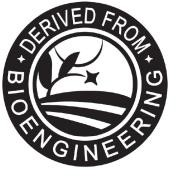
Voluntary BE disclosure is prohibited for foods that are exempt from mandatory disclosure. For example, a regulated entity could not voluntarily disclose BE content for organic foods or for foods whose BE content falls below the 5 percent inadvertent presence threshold, or for foods that are derived from animals fed BE feed (and are not otherwise subject to disclosure).
Absence Claims
AMS received a number of comments with respect to claims regarding the absence of bioengineering in food. In response, AMS notes that while the NBFDS covers mandatory and voluntary BE and BE-derived claims, the Act does not provide authority for AMS to establish an absence claims regime as part of the NBFDS. AMS also notes that FDA and, for certain products, USDA’s Food Safety Inspection Service retain authority over absence claims and that “[e]ntities seeking to use absence claims should ensure that such claims are in compliance with all applicable Federal laws and regulations and are otherwise truthful and not misleading.” Finally, while foods certified under the National Organic Program are exempt from the BE disclosure requirement, AMS states that the Act does not give the Agency the “authority to establish or align the NBFDS with a non-GMO label.”
AMS acknowledges that entities may participate in voluntary labeling initiatives such as the non-GMO Project so long as they are in compliance with all applicable Federal laws and regulations. To the degree possible, USDA has tried to minimize the impact the NBFDS will have on these voluntary absence claims. AMS acknowledges that some elements of the NBFDS may differ from requirements of some existing voluntary marketing claims. The Agency also notes that it has adopted the statutory definition of “bioengineering,” thereby exempting from disclosure foods such as refined products that have undergone processes that remove modified genetic material.
Other Claims
AMS repeatedly states that nothing in the rule prohibits regulated entities from providing additional statements or other claims regarding BE foods and BE food ingredients provided such statements are consistent with all applicable laws and regulations.
Recordkeeping
The rule provides regulated entities with significant flexibility with respect to recordkeeping, requiring maintenance of records that are “customary or reasonable” to demonstrate compliance. Such entities must maintain records for at least two years beyond the date the product is sold or distributed for retail sale. Entities must respond to AMS requests for records by providing records within five (5) business days of the request, unless AMS extends the deadline. AMS will provide prior notice of at least three (3) business days in advance of on-site inspections. Entities must provide AMS access to facilities necessary for records examinations.
Enforcement
The rule provides a process for any interested person with knowledge of a possible violation to file a statement or complaint with AMS. AMS may enforce compliance through an investigation that includes records audits and examinations or similar activity, either on its own initiative or in response to a complaint from a third party. If the entity that is the subject of such an investigation objects to any findings made by AMS, it may request a hearing in accordance with the rule. If the entity subject to the investigation does not request a hearing, or at the conclusion of a hearing and any subsequent revision of the findings made by AMS, the Agency will make the summary of the final results of the investigation public. The decision to make that summary public constitutes final agency action for purposes of judicial review. AMS does not have authority to issue civil penalties for violations.
The published version of the final rule and preamble (63 pages) can be accessed here:
About The Author:
Karen Ellis Carr is a partner at Arent Fox. She focuses her food and agriculture practice on regulatory counseling and litigation related to products regulated by USDA, EPA, and FDA. Carr works on issues related to biotechnology and other agricultural technologies, pesticides, food safety, advertising, and labeling, and environmental law. In addition to her work with individual companies, Carr has represented a number of industry associations on development and coordination of regulatory strategy, in litigation, and on federal and state legislative issues. She has first- and second-chaired matters in state and federal trial and appellate courts throughout the country and in arbitration and mediation, and has experience in all phases of litigation from pre-litigation strategy and counseling to settlement negotiation and appeals.


sábado, junho 23, 2018

📚 Boletín de referencias bibliográficas (Alimentación y Consumo) nº 111/2008


Artículos de revista
Índice:

Pág.

2 Acuicultura
3 Alimentación infantil
3 Alimentos ecológicos
5 Anisakis
6 Automatización
7 Biotecnología
8 China
10 Comportamiento y percepción del consumidor
10 Consumo colaborativo
11 Contaminación
13 Cualidades de los alimentos
14 Denominaciones de origen y otras indicaciones geográficas, marcas de calidad, etc.
14 Envases y embalajes
16 Etiquetado e información del consumidor
17 Fraudes
18 México
19 Pérdidas y desperdicio de alimentos
21 Políticas agroalimentarias
22 Publicidad y promoción de ventas
23 Salud y bienestar animal
24 Seguridad e inocuidad de los alimentos
25 Venta por Internet
25 Vino y otras bebidas alcohólicas
27 De nuestros archivos…
27 Blogs y redes sociales

23 Libros y otros documentos

Consultar: https://www.researchgate.net/publication/325606768_Boletin_n_111_2018_Referencias_bibliograficas_Alimentacion_y_Consumo

o

https://app.box.com/s/9jhioq12c36xxw1l9dqple171v3madf4

segunda-feira, dezembro 04, 2017

Boletín de referencias bibliográficas nº 105/2007


Artículos de revista

Índice:

Pág.

2 Biotecnología
3 Comportamiento y percepción del consumidor
6 Denominaciones de origen y otras indicaciones geográficas, marcas de calidad, etc.
7 Enoturismo
8 Entomofagia
8 Etiquetado e información del consumidor
9 Evaluación, gestión y comunicación de los riesgos
10 Fraudes
11 Halal (riesgos)
11 Italia
13 Libre circulación (UE)
13 Pérdidas y desperdicio de alimentos
14 Vinagre
15 Vino y otras bebidas alcohólicas
17 De nuestros archivos…
18 Blogs y redes sociales

21 Libros y otros documentos

38 Oposiciones a las Instituciones Europeas


W

terça-feira, outubro 24, 2017

Towards a new regulatory framework for GM crops in the European Union - Scientific, ethical, social and legal issues and the challenges ahead


Aware of the significant potential of nascent biotechnologies, the European Economic Community (the predecessor to the European Union) was one of the first regions in the world to develop a regulatory framework for them. Back in the 1980s, the objective of Community member countries was to strengthen the standards of consensus and collaboration, and of environmental and health safety, as well as to promote an industrial sector of enormous potential. In spite of all effort, towards the end of the 1990s it was a widely accepted fact that a number of political and economic factors were blocking the development of biotechnology in Europe. From that crisis emerged what in some aspects is probably the most comprehensive and rigorous body of regulations for biotechnology in the world today. However, the very high technical level of those regulations did not prevent a new crisis which EU institutions aim to solve with a new regulatory framework. Thus, since March 2015, the way towards the third regulatory framework for Biotechnology in the EU has been open. Will this third regulatory framework finally offer sufficient guarantees to allow a healthy and sustainable development of biotechnology in the EU? What do we need to do so that ‘third time is lucky’? In this work, a group of European and non-European experts, from different disciplines and approaches, discuss the past and the present, as well as the various possible futures, of Genetically Modified Crops in the EU.

Keywords: biotechnology, regulatory framework, European Union, genetically modified crops

See more at: http://www.wageningenacademic.com/doi/abs/10.3920/978-90-8686-845-2

o

https://www.researchgate.net/publication/320586022_Towards_a_new_regulatory_framework_for_GM_crops_in_the_European_Union_-_Scientific_ethical_social_and_legal_issues_and_the_challenges_ahead

Table of contents

● Front Matter
pp. 1–15
● Three decades later, what has become of the EU Regulation of GMOs?
L. Escajedo San-Epifanio
pp. 17–22
● 1. Decision-making on genetically modified crops in the EU: finding the way out or going even deeper into the maze?
A. López-Basaguren
pp. 23–45
● 2. Directive (EU) 2015/412 in the EU Acquis: its scope and significance
L. González Vaqué
pp. 47–59
● 3. Restrictions on GM crops in the European Union: between legislative unity and the diversity of national positions
F.J. Romero-Caro
pp. 61–75
● 4. Labelling requirements of GM food as compared to those of other foods
A. Arroyo Aparicio
pp. 77–85
● 5. A scientific view of the current status of genetically modified crops, foods and feed in the European Union
M. De Renobales
pp. 87–110
● 6. Franken-food or techno-fix? – Ethical issues of GMOs in Europe
M. Kaiser
pp. 111–122
● 7. Genome editing: does it move the goalposts on the GM playing field?
D.M. Bruce
pp. 123–129
● 8. Genetically modified crops in India: some observations
G. Pakky Reddy
pp. 131–140
● 9. GMO risk assessment in the EU: interplay between science, policy and politics
J.M. Casacuberta, F. Nogué, P. du Jardin
pp. 141–154
● 10. Substituting a fictional ‘science’ for public accountability: legitimacy problems of the EU’s regulatory framework for GM products
L. Levidow
pp. 155–166
● 11. EFSA’s role as an independent authority: a comparative perspective
M. Salvador Martínez
pp. 167–182
● 12. Towards a new regulatory framework for GMOs in the EU: will it be third time lucky?
L. Escajedo San-Epifanio
pp. 183–210

quarta-feira, abril 19, 2017

From corn to cattle, gene editing is about to supercharge agriculture


"Agriculture has come a long way in the past century. We produce more food than ever before — but our current model is unsustainable, and as the world’s population rapidly approaches the 8 billion mark, modern food production methods will need a radical transformation if they’re going to keep up. But luckily, there’s a range of new technologies that might make it possible. In this series, we’ll explore some of the innovative new solutions that farmers, scientists, and entrepreneurs are working on to make sure that nobody goes hungry in our increasingly crowded world."
Continua...

terça-feira, outubro 11, 2016

Boletín de referencias bibliográficas (Alimentación y Consumo) nº 92/2016


 INDICE:

 2 Biotecnología
 2 Brexit
 4 China
 5 Comercio internacional
 7 Comportamiento y percepción del consumidor
10 Etiquetado e información del consumidor
10 Nutrición y lucha contra la obesidad
12 Religión y producción alimentaria
12 Seguridad e inocuidad de los alimentos
13 Vino y otras bebidas alcohólicas
14 De nuestros archivos…
14 Blogs y redes sociales
15 Linkedin
17 Libros y otros documentos


segunda-feira, julho 04, 2016

Boletín bibliografico (alimentación y consumo) nº 88/2016


Pág.

2 Alimentos funcionales
3 Biotecnología
5 Canadá
5 China
7 Comercio internacional
7 Comportamiento y percepción del consumidor
11 Derecho alimentario (UE)
11 España
12 Etiquetado e información del consumidor
14 Evaluación, percepción y gestión de los riesgos
15 Frutas
17 Novel Foods
17 Pérdidas y desperdicio de alimentos
21 Potugal
22 Prácticas comerciales desleales
22 Principio de precaución
23 Productos “sin”
24 Publicidad y promoción de ventas
25 Salud y bienestar animal
26 Seguridad alimentaria (disponibilidad de alimentos)
27 Seguridad e inocuidad de los alimentos
28 Vino y otras bebidas alcohólicas
30 De nuestros archivos
31 Blogs y redes sociales
34 Otros documentos

Consultar: 

https://app.box.com/s/za3onts5yj1hrxtmi6wpter8fvxl7ver DOI: 10.13140/RG.2.1.3079.8325 


https://www.researchgate.net/publication/304778122_Boletin_de_bibliografia_alimentacion_y_consumo_n_882016


segunda-feira, maio 06, 2013

Boletines de bibliografía AIBADA/EUPHARLAW


Bibliografía alimentaria (y sobre otros productos de consumo):

- Vol 1 nº 1, 2013 (alimentos funcionales, nutraceuticals, Derecho alimentario, etc.): http://www.eupharlaw.com/docs/eupbi01.pdf
.
- Vol 1 nº 2, 2013 (biotecnología, botánica, ética de la investigación, etc.): http://www.foroibercisalud.com/docs/eupbi02.pdf
.
- Vol 1 nº 3, 2013 (alergias, alimentos funcionales, biotecnología, contaminantes, toxicología, etc.): http://www.foroibercisalud.com/docs/eupbi03.pdf
.
- Vol 1 nº 4, 2013 (alimentación sostenible, bebidas energéticas, nutrición, obesidad, etc.): http://www.foroibercisalud.com/docs/eupbi04.pdf 
.
- Vol 1 nº 5, 2013 (alergias, alimentos funcionales, biotecnología, contaminantes, etc.): http://www.foroibercisalud.com/docs/eupbi05.pdf
.
- Vol 1 nº 6, 2013 (alimentos ecológicos, funcionales, etiquetado, nanotecnología, etc.): http://www.foroibercisalud.com/docs/eupbi06.pdf
..
- Vol 1 nº 7, 2013 (alergias, alimentos funcionales, Ciencias veterinarias, fraudes alimentarios, etc.): http://www.foroibercisalud.com/docs/eupbi07.pdf
.
- Vol 1 nº 8, 2013 (aditivos, análisis y controles, etiquetado, lucha contra la obesidad, etc.): http://www.foroibercisalud.com/docs/eupbi08.pdf
..
- Vol 1 nº 9, 2013 (alergias, biotecnología, EFSA, etiquetado, lucha contra la obesidad, etc.): http://www.foroibercisalud.com/docs/eupbi09.pdf
.
- Vol 1 nº 10, 2013 (alimentos funcionales, comercio justo, información del consumidor, probióticos, etc.): http://www.foroibercisalud.com/docs/eupbi10.pdf
.
- Vol 1 nº 11, 2013 (adicciones, alimentos funcionales, biotecnología, nanotecnología, principio de precaución, etc.): http://www.foroibercisalud.com/docs/eupbi11.pdf
.
- Vol 1 nº 12, 2013 (alimentos "milagro", EFSA, información y percepción del consumidor, publicidad, etc.): http://www.foroibercisalud.com/docs/eupbi12.pdf
.
- Vol 1 nº 13, 2013 (alimentos funcionales, biotecnología, grasas "trans", nutrición, etc.): http://www.foroibercisalud.com/docs/eupbi13.pdf
.
- Vol 1 nº 14, 2013 (alimentos funcionales, biotecnología, Derecho alimentario, etiquetado, etc.): http://www.foroibercisalud.com/docs/eupbi14.pdf
-
- Vol 1 nº 15, 2013 (alergias, alimentos funcionales, etiquetado, nutrición, etc.): http://www.foroibercisalud.com/docs/eupbi15.pdf
.
- Vol 1 nº 16, 2013 (aditivos y aromas alimentarios, alimentos funcionales, biotecnología, nanotecnología, etc.): http://www.foroibercisalud.com/docs/eupbi16.pdf
.
- Vol 1 nº 17, 2013 (biotecnología, etiquetado, información del consumidor, nanotecnología, etc.): http://www.foroibercisalud.com/docs/eupbi17.pdf
.
- Vol 1 nº 18, 2013 (alimentos funcionales, café y cafeína, controles e inspecciones, ética, etc.): http://www.foroibercisalud.com/docs/eupbi18.pdf


N.B. Los miembros de “Socdercon” también pueden consultar todos los boletines bibliográficos del grupo en el apartado “ARCHIVOS” de la siguiente página de Internet: http://es.groups.yahoo.com/group/socdercon/ [si tienen alguna dificultad para acceder a los archivos o desean recibir un determinado boletín, pueden enviar un mensaje electrónico a cristinavidreras@yahoo.es  (indicando como referencia "boletín de bilografía")].


w
w