Mostrando postagens com marcador Etiquetado. Mostrar todas as postagens

sexta-feira, maio 28, 2021

🙎‍♂️🙎‍♀️🙋🙎‍♂️ Segundo encuentro del Conversatorio internacional - "Venta electrónica de alimentos" - 2 de junio de 2021

 ⚠️ Inscripción abierta al segundo encuentro del Conversatorio internacional junto #UNRaf, gratuito y únicamente a distancia: 2 de junio de 2021 - 15:00 h. Argentina; 20:00 h. España.


¡Cupos limitados! 

quinta-feira, abril 01, 2021

Definição do regime de produção e comércio de vinhos e produtos vitivinícolas com direito às dop da região de lisboa portaria n.º 57/2021, de 12 de Março

Portaria n.º 57/2021, de 12 de março (Portaria), que entrou em vigor no dia 13 de março, vem reunir os vários regimes jurídicos das denominações de origem da região de Lisboa, procedendo, simultaneamente, à sua adequação ao quadro legal vigente, simplificando a interpretação dos vários regimes.

A Portaria define o regime de produção e comércio dos vinhos e demais produtos vitivinícolas com direito às Denominações de Origem Protegidas (DOP) «Alenquer», «Arruda», «Torres Vedras», «Bucelas», «Carcavelos», «Colares», «Encostas d’Aire», incluindo a indicação das sub-regiões de «Alcobaça» e «Ourém», através da designação de «Medieval de Ourém», «Lourinhã» e «Óbidos», mantendo-se o seu reconhecimento.

Revoga a Portaria n.º 167/2005, de 11 de fevereiro, que aprovou o regulamento de produção e comércio da denominação de origem Encostas d'Aire, e a Portaria n.º 816/2006, de 16 de agosto, que alterou os Estatutos da Zona Vitivinícola de Óbidos.

1. Regras comuns às várias DOP

a. Obrigações em matéria de inscrição e informação

Todas as pessoas singulares ou coletivas com aptidão ou direito a DOP, que se dediquem à produção e comercialização de vinhos e produtos vitivinícolas, ficam obrigadas a:

  • Inscrever-se e inscrever as respetivas vinhas e instalações de vinificação, destilação, embalamento e armazenamento, ficando sujeitos a verificação de conformidade e controlo por parte da entidade certificadora;
  • Assegurar a rastreabilidade em todas as fases, bem como a sua transmissão aos operadores económicos a quem forneçam os seus produtos;
  • Informar a entidade certificadora sobre qualquer alteração na titularidade das vinhas ou instalações descritas, bem como de qualquer um dos atributos registados, sob pena de desclassificação das respetivas uvas e demais produtos vitivinícolas com aptidão ou direito à respetiva DOP.

b. Práticas culturais e rendimentos por hectare

As práticas culturais utilizadas nas vinhas devem ser as tradicionais na região ou as recomendadas pela entidade certificadora, devendo respeitar, simultaneamente, as regras específicas previstas para cada região nesta mesma Portaria.

A designação «Medieval de Ourém» não pode ser utilizada quando for excedido o rendimento máximo por hectare; nos restantes casos, as DOP podem ser usadas para as quantidades produzidas até aos limites estabelecidos e o excedente pode ser destinado à comercialização de vinhos e produtos vitivinícolas sem direito a DOP.

A produção de mostos e vinhos com e sem direito a DOP é realizada nas condições definidas pela entidade certificadora, mas o seu armazenamento deve ser realizado em áreas separadas e em recipientes devidamente identificados.

c. Vinificação

Os vinhos e produtos vitivinícolas com direito a DOP devem ser produzidos dentro das regiões de produção ou nas regiões vitivinícolas confinantes com a área delimitada de cada DOP, devendo dar‑se conhecimento à entidade certificadora da outra região envolvida.

A produção deve seguir os métodos de vinificação tradicionais e as práticas e tratamentos enológicos legalmente autorizados, devendo os produtos apresentar as características legalmente definidas para a categoria.

d. Engarrafamento, rotulagem e comercialização

Os vinhos e produtos vitivinícolas com direito a DOP podem ser engarrafados ou embalados fora da área geográfica delimitada, de acordo com as regras de controlo definidas pela entidade certificadora.

A rotulagem tem de respeitar as normas e o respetivo caderno de especificações e está sujeita à aprovação da entidade certificadora.

Na rotulagem deste tipo de produtos podem ser indicadas algumas das designações complementares e as menções tradicionais definidas na Portaria n.º 26/2017, de 13 de janeiro, que estabelece as regras complementares relativas à designação, apresentação e rotulagem dos produtos do setor vitivinícola.

Com exceção das marcas registadas pelos municípios ou cooperativas com igual designação, a referência na rotulagem de unidades geográficas menores ou maiores do que a área subjacente a uma DOP só pode ser feita em associação direta, e em caracteres de dimensão inferior, ao nome da respetiva DOP.

Os vinhos e produtos vitivinícolas só podem ser comercializados após certificação pela entidade certificadora.

e. Circulação e documentação de acompanhamento

A circulação e comercialização dos vinhos e produtos vitivinícolas com direito a DOP depende dos seguintes pressupostos:

  • Nos respetivos recipientes, à saída das instalações de elaboração, deve figurar a denominação do produto;
  • Produtos acompanhados da necessária documentação oficial, da qual conste a sua denominação de origem;
  • Cumprimento das restantes exigências estabelecidas pela legislação em vigor e definidas pela entidade certificadora e constantes do caderno de especificações.

f. Controlo oficial e proteção das DOP

A Comissão Vitivinícola da Região de Lisboa controla a produção e o comércio, bem como a promoção, a defesa e a certificação dos produtos vitivinícolas com direito às DOP.

Não é permitida a utilização, noutros produtos vitivinícolas, de nomes, de marcas, de termos, de expressões ou de símbolos suscetíveis de, pela sua similitude gráfica ou fonética com os nomes protegidos pela presente Portaria, confundir o consumidor.

2. Regras específicas para cada DOP

A Portaria contém ainda um conjunto de regras específicas para cada região, relacionadas com o âmbito da denominação de origem, a delimitação da área de produção, os solos recomendados, as castas, as práticas culturais, o rendimento por hectare, a vinificação e práticas enológicas e as características dos vinhos.

Mariana Soares David [+ info] Sofia Rodrigues Pereira [+ info]

[Morais Leitão, Galvão Teles, Soares da Silva & Associados]

quarta-feira, março 25, 2020

Carne y productos de origen animal [Meat and Animal-Derived Food Products]


Olivia F. Fajen, “USA - Best Practices for Meat Producers”. Animal Law Update (2019) [Blog source_jdsupra.com/legalnews/ - available on the Internet at https://animallaw.foxrothschild.com/2019/06/10/best-practices-for-meat-producers/ 

  
Jessica Burt, “Food labelling – distinguishing between meat & non-meat products; the UK position”. Food and agribusiness (2019) [Blog Source_Mills & Reeve - available on the Internet at https://www.food-law-blog.co.uk/2019/05/food-labelling-distinguishing-between-meat-non-meat-products-the-uk-position.html 


Ryan Fournier and Robert Hibbert, “USA - What’s in My Meal Kit? USDA Releases Guideline for Meal Kits Containing Meat or Poultry”. WELL DONE BLOG (2019) [Blog Source_w-morganlewis/com-blog - available on the Internet at https://www.morganlewis.com/blogs/welldone/2019/07/whats-in-my-meal-kit-usda-releases-guideline-for-meal-kits-containing-meat-or-poultry


W

quarta-feira, outubro 23, 2019


Posted on October 21, 2019 by editor

By Heather F. Collins, M.S.


On October 17, 2019, the U.S. Environmental Protection Agency (EPA) released the Spanish Translation Guide for Pesticide Labeling [ https://www.epa.gov/pesticide-labels/spanish-translation-guide-pesticide-labeling ] resource for use by all, including pesticide registrants that choose to display parts of their pesticide product label in Spanish. The purpose of the guide is to be a resource for the translation of the health and safety sections on pesticide labeling from English to Spanish. EPA states that the “guide is written in a universal form of Spanish to reach as many Spanish speakers as possible.”

While translating pesticide labels is not a requirement, EPA generally allows pesticide registrants to translate their product labels into any language so long as there is an EPA-accepted English version of the label and the translation is true and accurate. The guide is not intended to substitute for or eliminate the pesticide labels in English. An English version of all required labeling text is needed for all pesticide products in accordance with 40 C.F.R. Section 156.10(a)(3).

The guide provides translations for standard language typically used in the health and safety sections of pesticide product labels such as the: 
  • First aid and precautionary statement label language; 
  • Signal words; 
  • Misuse statements; 
  • Storage and pesticide container disposal instructions; 
  • Personal protection equipment label statements; and 
  • Worker Protection Standard agricultural use requirements. 

EPA states that it “developed the Spanish translation guide in response to feedback from stakeholders who believe that having bilingual pesticide labeling is critical to the well-being of pesticide handlers, applicators, and farmworkers, many of whom do not speak English as a first language.”

The English statement appears in the left-hand column and the corresponding Spanish translation is available in the right-hand column of the guide. EPA states that the “guide will help registrants maintain accurate, consistent translations on product labels and ease their burden when adding Spanish translations.”


TAGS: pesticide label, Spanish translation, guide

segunda-feira, outubro 14, 2019

The Regulatory Impact Analysis and the draft amendment of the Official Mexican Standard “General Labelling Specifications for Pre-packaged Foods and Non-Alcoholic Beverages”


By Ernesto Algaba & Cecilia Stahlhut on October 10, 2019


POSTED IN ADVERTISING, FOOD LABELING, MEXICO, SUGAR


On October 7th, 2019, the Regulatory Impact Analysis and the draft amendment of the Official Mexican Standard NOM-051-SCFI/SSA1-2010 – “General Labelling Specifications for Pre-packaged Foods and Non-Alcoholic Beverages – Commercial and Health Information” were published in the portal of the National Commission on Regulatory Improvement. The foregoing was the result of the proposal for amendment of the General Health Law in terms of the front labeling warnings, submitted by the Health Commission of the House of Representatives.


Below please find some of the main modifications included in the aforementioned draft amendment:


i. It introduces new applicable terms and definitions, such as sugar added and sugar-free, natural or artificial sweetener, front labeling system; supplementary nutrition facts, children, critical nutrients, genuine and substitute products, warning stamp, among others.


ii. It now forbids the use of legends which refer to recommendations or endorsements by professional companies or associations.


iii. The use of characters, drawings, celebrities, gifts, offers, toys or contests is now forbidden for certain product categories.


iv. Likewise, the new draft amendment now limits the advertising of certain product categories in social media.


v. New rules apply for the use and declaration of the denomination of foods, mainly in terms of genuine and substitute products.


vi. Furthermore, the draft amendment sets out new guidelines for the declaration of ingredients, among which the following stand out: 
  • Declaration of sugars, their categories, and quantities. 
  • Declarations of allergens and ingredients which may cause hypersensitivity and/or intolerance, including new categories thereof (e.g. syrups). 
  • Tighter regulations for additives. 


vii. Draft amendments introduce the obligation to declare added sugars and trans-fats, as part of the Nutritional Declaration of products.


viii. It now broadens the supplementary nutritional facts chapter.


ix. Adopts the Front Labeling System, the purpose of which is to warn and inform the consumer regarding nutrients which, according to the provisions of the Official Mexican Standards (NOM), constitute a health risk. For example: 

  • The use of warning stamps in connection with nutrients (for example: “Excess Calories”). 
  • The use of warning stamps in connection with sweeteners (for example: “It contains sweeteners, should be avoided for children”). 
  • Precautionary legends (for example: “It contains caffeine, should be avoided in children”). 
  • Finally, the draft amendment provides for a Conformity Assessment Procedure, and now introduces the obligation to obtain a compliance opinion. 


quinta-feira, maio 09, 2019

Key Provisions Of USDA's Bioengineered Food Disclosure Rule

Arent Fox - https://www.arentfox.com/


On December 21, 2019, the U.S. Department of Agriculture (USDA) Agricultural Marketing Service (AMS or Agency) issued its final rule establishing a National Bioengineered (BE) Food Disclosure Standard (NBFDS). The rule implements amendments to the Agricultural Marketing Act made by Public Law 114-216 on July 29, 2016 (the Act) and follows an initial request for comment by AMS on June 28, 2017 and publication of a proposed rule on May 4, 2018. This two-part article summarizes key provisions of this new federal marketing standard, including the Agency’s approach to defining “bioengineered foods” and addressing refined ingredients, voluntary labeling, absence claims, and the applicable disclosure threshold. Part 1 discussed compliance deadlines, responsible parties, definitions, AMS’ list of bioengineered foods, and exemptions from the rule. In this Part 2, we’ll cover disclosure options, voluntary disclosure, absence claims, administrative issues, and enforcement.
Mandatory Disclosure
The rule incorporates the four disclosure options provided in the Act: text, symbol, electronic or digital link, and text message. The BE disclosure must appear on the information panel or the principal display panel of the product label, or on an alternate label panel if those panels contain insufficient space.
  1. Text Disclosure. For a BE raw agricultural commodity or an ingredient produced from that commodity, the text disclosure is “bioengineered food.” For a multi-ingredient food that contains both BE ingredients and non-BE ingredients, the text disclosure is “contains a bioengineered food ingredient.”
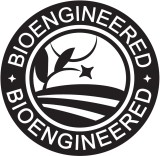
  2. Disclosure Via SymbolRegulated entities seeking to use a symbol may use a black and white or color version of the following, which includes the word “bioengineered” in an effort to provide more information to consumers in a way that is appropriate and non-disparaging:
  1. Disclosure Via Electronic/Digital LinkRegulated entities choosing to disclose BE content using the electronic or digital link option must accompany the link with the statement “Scan here for more food information” (or equivalent language that reflects technological changes) along with a telephone number and clear calling instructions, i.e., “Call [1-000-000-0000] for more food information,” in close proximity to the link. The telephone disclosure must be available at all times of the day and clearly provide BE food information to the caller. Prerecorded information is permitted. The electronic or digital link must provide the bioengineering disclosure on the first product information page accessed through the link, without any marketing and promotional information.
  2. Disclosure Via Text MessageRegulated entities that choose this option are required to include a statement on the package that instructs consumers on how to receive a text message. Those instructions can be shared or centralized among regulated entities, if so desired. Industry is not prohibited from developing a standardized instruction or response if it is in compliance with the NBFDS regulations.
The rule also provides options for disclosure in certain special cases:
  1. Additional Disclosure Options for Small Food ManufacturersAMS provides small food manufacturers, defined as a “food manufacturer with annual receipts of at least $2,500,000 but less than $10,000,000,” with two additional disclosure options for the product label: (1) a telephone number accompanied by appropriate language, e.g., “Call [1-000-000-0000] for more food information”; or (2) an Internet website address, e.g., a URL, with accompanying text, e.g., “Visit [URL of the website] for more food information.”
  2. Additional Disclosure Options for Small and Very Small Packages. For small and very small packages, defined using FDA’s labeling requirements, regulated entities can replace the statement “Scan here for more food information” associated with a link disclosure with the statement “Scan for info.” For the text message, entities can replace the statement “Text [number] for more bioengineered food information” with “Text [number] for info.” For very small packages, regulated entities may use a label’s preexisting URL or telephone number for disclosure.
  3. Disclosure for Food Sold in Bulk ContainersAMS holds retailers responsible for complying with the BE food disclosure for bulk food. The disclosure must appear on signage or other materials (stickers, bindings, etc.) on or near the bulk item. Entities can use any of the options for disclosure including text, symbol, electronic or digital link, or text message (if applicable).
In response to a comment requesting an alternative website disclosure option, AMS indicated that, while it does not have the authority to require such a disclosure, regulated entities are free to include BE disclosures on their websites.
Voluntary Disclosure
AMS agrees that voluntary BE disclosure is permissible under the Act, and the rule makes voluntary disclosure available to exempt entities and to foods in which rDNA material is not detectable but which are derived from BE crops or foods.
Entities that are otherwise exempt from the requirements of the NBFDS (very small food manufacturers, and restaurants and similar retail food establishments) may voluntarily provide disclosure of BE food that would otherwise be subject to disclosure under the NBFDS. In order to provide consistency with mandatory disclosure requirements and avoid consumer confusion, voluntary disclosure must be in one or more of the forms specified in the rule for mandatory disclosure (i.e., text, symbol, digital or electronic link, text message, or appropriate small manufacturer and small or very small package disclosure options, as applicable).
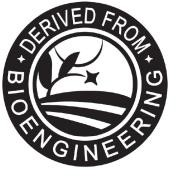
For those foods or food ingredients that (A) do not meet the definition of “bioengineered food,” (B) are not exempt from disclosure under the rule, and (C) are derived from a food on the List (described in Part 1), regulated entities may disclose such foods with one of the BE disclosure options described in the rule (text, symbol, electronic or digital link, text message, or appropriate small manufacturer and small or very small package disclosure options, as applicable). Such voluntary disclosures must state either that the food is “derived from bioengineering” or contains “ingredient(s) derived from a bioengineered source,” although “ingredient” may be replaced with the name of the specific BE crop or ingredient or may use the designated voluntary disclosure symbol.
Voluntary BE disclosure is prohibited for foods that are exempt from mandatory disclosure. For example, a regulated entity could not voluntarily disclose BE content for organic foods or for foods whose BE content falls below the 5 percent inadvertent presence threshold, or for foods that are derived from animals fed BE feed (and are not otherwise subject to disclosure).
Absence Claims
AMS received a number of comments with respect to claims regarding the absence of bioengineering in food. In response, AMS notes that while the NBFDS covers mandatory and voluntary BE and BE-derived claims, the Act does not provide authority for AMS to establish an absence claims regime as part of the NBFDS. AMS also notes that FDA and, for certain products, USDA’s Food Safety Inspection Service retain authority over absence claims and that “[e]ntities seeking to use absence claims should ensure that such claims are in compliance with all applicable Federal laws and regulations and are otherwise truthful and not misleading.” Finally, while foods certified under the National Organic Program are exempt from the BE disclosure requirement, AMS states that the Act does not give the Agency the “authority to establish or align the NBFDS with a non-GMO label.”
AMS acknowledges that entities may participate in voluntary labeling initiatives such as the non-GMO Project so long as they are in compliance with all applicable Federal laws and regulations. To the degree possible, USDA has tried to minimize the impact the NBFDS will have on these voluntary absence claims. AMS acknowledges that some elements of the NBFDS may differ from requirements of some existing voluntary marketing claims. The Agency also notes that it has adopted the statutory definition of “bioengineering,” thereby exempting from disclosure foods such as refined products that have undergone processes that remove modified genetic material.
Other Claims
AMS repeatedly states that nothing in the rule prohibits regulated entities from providing additional statements or other claims regarding BE foods and BE food ingredients provided such statements are consistent with all applicable laws and regulations.
Recordkeeping
The rule provides regulated entities with significant flexibility with respect to recordkeeping, requiring maintenance of records that are “customary or reasonable” to demonstrate compliance. Such entities must maintain records for at least two years beyond the date the product is sold or distributed for retail sale. Entities must respond to AMS requests for records by providing records within five (5) business days of the request, unless AMS extends the deadline. AMS will provide prior notice of at least three (3) business days in advance of on-site inspections. Entities must provide AMS access to facilities necessary for records examinations.
Enforcement
The rule provides a process for any interested person with knowledge of a possible violation to file a statement or complaint with AMS. AMS may enforce compliance through an investigation that includes records audits and examinations or similar activity, either on its own initiative or in response to a complaint from a third party. If the entity that is the subject of such an investigation objects to any findings made by AMS, it may request a hearing in accordance with the rule. If the entity subject to the investigation does not request a hearing, or at the conclusion of a hearing and any subsequent revision of the findings made by AMS, the Agency will make the summary of the final results of the investigation public. The decision to make that summary public constitutes final agency action for purposes of judicial review. AMS does not have authority to issue civil penalties for violations.
The published version of the final rule and preamble (63 pages) can be accessed here:
About The Author:
Karen Ellis Carr is a partner at Arent Fox. She focuses her food and agriculture practice on regulatory counseling and litigation related to products regulated by USDA, EPA, and FDA. Carr works on issues related to biotechnology and other agricultural technologies, pesticides, food safety, advertising, and labeling, and environmental law. In addition to her work with individual companies, Carr has represented a number of industry associations on development and coordination of regulatory strategy, in litigation, and on federal and state legislative issues. She has first- and second-chaired matters in state and federal trial and appellate courts throughout the country and in arbitration and mediation, and has experience in all phases of litigation from pre-litigation strategy and counseling to settlement negotiation and appeals.


quarta-feira, novembro 14, 2018

AMA seeks warning labels for foods with high added sugar content


California voters overwhelmingly approved a measure (Proposition 12) on November 6 that requires stricter animal During the 2018 American Medical Association (AMA) Interim Meeting, held November 8–13, delegates adopted a new policy aimed at increasing consumer awareness of the amount of added sugars, as well as the type of allergens, in food products. Specifically, the AMA is urging the U.S. Food and Drug Administration (FDA) to develop front-of-package warning labels for foods that are high in added sugars based on the established recommended daily value. The policy also encourages the FDA to limit the amount of added sugars allowed to be included in food products that also make claims about health or nutrient content on the front of their packages.
According to the AMA, many front-of-package food labels that make health claims about a particular nutrient are often placed on products that contain added sugars that are above the daily recommended value as outlined in the 2015–2020 U.S. Dietary Guidelines for Americans. The association believes that these nutrient claims may lead consumers to think a product is healthy despite the product’s level of added sugar.
Under the new policy, the AMA is also encouraging food manufacturers to pursue more obvious packaging distinctions between products that contain the most common food allergens identified in the Food Allergen Labeling and Consumer Protection Act and products that do not contain these allergens.
“The AMA believes that food packaging should include more transparent information about the contents within our food, so the healthy choice can be the easy choice for consumers,” said Albert J. Osbahr, III, a member of the AMA board of trustees. “When consumers have access to the amount of sugar they are consuming, they may choose foods with less sugar—which can help prevent debilitating chronic medical conditions, such as type 2 diabetes and heart disease which affect millions of Americans.”
The AMA has existing policy to ensure Americans better understand the actual amount of sugar contained in the foods they consume, including policy in support of the FDA’s decision to include added sugars on nutrition labels.

sb@icab.cat

W

segunda-feira, fevereiro 05, 2018

Boletín nº 107 (2018) Referencias bibliográficas (Alimentación y Consumo)


Índice:
Pág.
2   Aceite de oliva
3   Africa
4   Agricultura
5   Alergias
6   China
7   Complementos alimenticios
8   Comportamiento y percepción del consumidor
10 Denominaciones de origen y otras indicaciones geográficas
10 Derecho a la alimentación
11 EE.UU.
11 EFSA
12 Etiquetado e información del consumidor
13 Fraudes
14 Nanotecnología
15 Normas ISO
16 Pérdidas y desperdicio de alimentos
18 Publicidad y promoción de ventas
19 Salud y bienestar animal
20 De nuestros archivos…
21 Blogs y redes sociales
27 Libros y otros documentos

Consultar: https://app.box.com/s/53l0gpjfw2wgrlmea4w2hq0r2cedcxym


terça-feira, outubro 03, 2017

🌐 Boletín de referencias bibliográficas (alimentación y consumo) nº 102/2017


Artículos de revista
Índice:
Pág.
2 Alergias
3 Alimentación y consumo sostenibles
5 Biotecnología
6 China
7 Comportamiento y percepción del consumidor
11 Denominaciones de origen y marcas de calidad
12 Derecho a la alimentación
13 Envases y embalajes
14 Etiquetado e información del consumidor
15 Leche y productos lácteos
16 Legislación comparada
17 Nutrición y lucha contra la obesidad
18 Pérdidas y desperdicio de alimentos
20 Responsabilidad penal
20 Vino y otras bebidas alcohólicas

quinta-feira, julho 06, 2017

15 years of genetically modified organisms (GMO) in Brazil: Risks, labeling and public opinion

Biancca Scarpeline de Castro


  • Localización: Revista agroalimentariaISSN-e 1316-0354, Vol. 22, Nº. 42, 2016págs. 103-117

  • Idioma: inglés

  • Títulos paralelos:
    • 15 ans d’organismes génétiquement modifiés (OGM) au Brésil : : Des risques, l’étiquetage et l’opinion publique
    • 15 años de organismos genéticamente modificados (OGM) en Brasil: : riesgos, etiquetado y opinión pública
    • 15 anos de organismos geneticamente modificados (OGM) no Brasil: : riscos, rotulagem e opinião pública
  • Resumen
    • Español
      El objetivo de este trabajo es mostrar la introducción y difusión de los organismos genéticamente modificados en Brasil, con énfasis en los argumentos sobre el etiquetado y la opinión pública sobre el tema. Los hallazgos se basan en investigaciones a largo plazo sobre el tema y en el análisis de las entrevistas realizadas con las partes interesadas y el público en general. A partir del estudio se revela que los conflictos relacionados con los OGM en Brasil fueron muy polarizados y se desarrollaron como conflictos de riesgos. Se muestra así mismo que el etiquetado es considerado por los que se oponen a los transgénicos como una condición esencial para la elección de productos por parte del consumidor, mientras que las empresas e instituciones en favor de los productos transgénicos tienen una opinión diferente sobre el tema. Los resultados de una encuesta con más de 800 consumidores brasileros indicaron que estos están más preocupados por las cuestiones relacionadas con la contaminación (biológica y química) y las características nutricionales de los alimentos que con la biotecnología vegetal.
    • Português
      O objetivo deste trabalho é apresentar a introdução e difusão de organismos geneticamente modificados no Brasil, enfatizando as contendas sobre rotulagem e a opinião pública sobre o assunto. As conclusões são baseadas em pesquisas de longo prazo sobre o tema e na análise de entrevistas com as partes interessadas e o público em geral. Demonstra-se que os litígios relacionados aos OGM no Brasil eram muito polarizada e se desdobraram como conflitos de riscos. Mostra-se que a rotulagem é considerada por aqueles que se opõem aos OGM como uma condição essencial para a escolha do consumidor, enquanto as empresas e instituições favoráveis a esses produtos têm uma opinião diferente sobre o assunto. Os resultados de uma pesquisa com mais de 800 consumidores brasileiros indicaram que eles estão mais preocupados com as questões relacionadas à contaminação (química e biológica) dos alimentos e às suas características nutricionais do que com o fato de serem produzidos utilizando a biotecnologia.
    • English
      The objective of this paper is to present the introduction and diffusion of genetically modified organisms in Brazil, emphasizing the contentions about labeling and the public opinion about the issue. The findings are based on long-term research on the topic, as well as in analysis of interviews with stakeholders and the general public. It is disclose that disputes related to GMOs in Brazil were very polarized and unfolded as conflicts of risks. It is also shown that labeling is considered by those opposed to GMOs as an essential condition for the consumer´s choice of products, while companies and institutions in favor of GM products have a different opinion on the issue. The results of a survey with over than 800 Brazilian consumers indicated that they are more concerned with issues related to contamination (biological and chemical) and nutritional characteristics of foods than plant biotechnology.
    • Français
      L’objectif de cet article est de présenter l’introduction et la diffusion des organismes génétiquement modifiés au Brésil, en mettant l’accent sur les allégations relatives à l’étiquetage et l’opinion publique sur la question. Les résultats sont basés sur la recherche à long terme sur le sujet et à l’analyse des entrevues avec les intervenants et le grand public. Il est démontré que les différends liés aux OGM au Brésil étaient très polarisée et s’est déroulé comme les conflits de risques. Il est montré que l’étiquetage est considéré par ceux qui s’opposent aux OGM comme une condition essentielle pour le choix du consommateur de produits, tandis que les entreprises et les institutions en faveur des produits génétiquement modifiés ont une opinion différente sur la question. Les résultats d’un sondage avec plus de 800 consommateurs brésiliens ont indiqué qu’ils sont plus préoccupés par les questions liées à la contamination des caractéristiques (chimiques et biologiques) et nutritionnelles des aliments que la biotechnologie végétale.

segunda-feira, fevereiro 06, 2017

Boletín de referencias bibliográficas - Sociología y Derecho del consumo y de la alimentación nº 36/2017


Indice:

Pág. 

2    Aditivos 
2    Agricultura sostenible 
3  Alimentos ecológicos  
4  Biotecnología  
5  Brexit  
6  Carne y productos cárnicos  
6  China  
9  Comercio internacional 
11  Comportamiento y percepción del consumidor
13  Declaraciones relativas a la salud 
14  Denominaciones de origen y otras indicaciones geográficas
16  EE.UU.
17  EFSA
17  Envases y embalajes
18  España
19  Etiquetado e información del consumidor
22  Leche y productos lácteos
23  Novel Foods
23  Nutrición y lucha contra la obesidad
25  Pérdidas y desperdicio de alimentos
30  Residuos
30  Salud y bienestar animal
31  Seguridad alimentaria (disponibilidad de alimentos)
32  Vino y otras bebidas alcohólicas 
33  De nuestros archivos 
33  Blogs y redes sociales 
38  Libros y otros documentos

Véase: https://app.box.com/s/fqag4zvxfm4itsc9k7uw40gjbt2vj824


segunda-feira, janeiro 09, 2017

Boletín de referencias bibliográficas (alimentación y consumo) nº 95/2016


Índice:
Pág.
  2                           Acuacultura
  3                           Brexit
  5                           China
  6                           Comercio internacional
  6                           Complementos alimenticios
  8                           Comportamiento y percepción del consumidor
12                           Contaminación 
13                           Controles e inspecciones
14                           Denominaciones de origen y otras indicaciones geográficas
15                           Envases y embalajes
16                           Etiquetado e información del consumidor
19                           Evaluación, gestión y comunicación de los riesgos
20                           Leche y prouctos lácteos
21                           Nutrición y lucha contra la obesidad
21                           Pérdidas y desperdicio de alimentos
24                           Salud y bienestar animal
25                           Seguridad alimentaria (disponibilidad de alimentos)
26                           Seguridad e inocuidad de los alimentos
26                           Transtornos alimentarios
27                           Unión Europea - Taiwan
28                           Vino y otras bebidas alcohólicas    
30                           De nuestros archivos…    
30                           En Linkedin
34                           Libros y otros documentos

✔ Descargar en: https://www.researchgate.net/publication/312164811_Boletin_de_referencias_bibliograficas_alimentacion_y_consumo_n_952016

Si tiene dificultades para descargar el archivo adjunto puede hacerlo en el siguiente enlace: https://app.box.com/s/w4ae9pf6gapugn5ya1tioignqlz262qr