Mostrando postagens com marcador EE.UU.. Mostrar todas as postagens

quinta-feira, março 18, 2021

In brief: food and animal safety in USA


Food safety, certification programmes, animal safety and disease

Livestock legislation

Primary processors in the United States are subject to legislation governing their methods of treatment and slaughter of live animals. The Humane Methods of Slaughter Act (HMSA) governs the slaughter process itself. The HMSA enjoys some pre-emptive power over the states and is enforced by the US Department of Agriculture (USDA). Importantly, the HMSA does not apply to poultry slaughter.

Another principal piece of legislation in this area is the Federal Meat Inspection Act (FMIA). The FMIA confers broad authority onto the Food Safety and Inspection Service (FSIS), a federal agency within the USDA, to implement and enforce thorough inspection criteria for food processors. The FMIA applies to slaughterhouses that transport their products across state lines. A supplemental piece of legislation, the Wholesome Meat Act, requires all states to have intrastate inspection programmes ‘equal to’ that of the federal government. These laws work in tandem to create a national scheme of health and safety governance applicable to primary processors of most live animals. Relatedly, the Poultry Products Inspection Act (PPIA) imposes safe and humane slaughter and processing of poultry products.


Food safety regime


Different statutes regulate the safety and labelling of meat and poultry at the federal level. The FMIA and the PPIA regulate the production, safety and labelling of meat and poultry products, respectively, with few exceptions. Under the FMIA and the PPIA, and their implementing regulations and policy statements, the FSIS broadly regulates nearly all aspects of the harvest, processing and labelling of meat, poultry and certain egg products regulated under the Egg Products Inspection Act (EPIA). 

Two important concepts run through these regulatory schemes: adulteration and misbranding. Adulteration is the standard for food purity and safety, broadly defining which food products meet regulatory requirements and are safe for consumption. Misbranding relates to whether the labelling of a food meets regulatory requirements. The FSIS regulations, policy memoranda and the Food Standards and Labelling Policy Book provide additional labelling requirements and guidance for meat and poultry products.

Most food products are regulated under the Federal Food, Drug and Cosmetic Act (FDCA) administered by the Food and Drug Administration (FDA). Whole eggs in shells are regulated under the FDCA but other egg products are regulated under the EPIA, administered by the FSIS. Animal feed and pet food are also regulated under the FDCA as are dietary supplements, medical foods and infant formula, but with some additional requirements. Alcohol products are almost entirely regulated under the Federal Alcohol Administration Act, administered by the US Treasury Department’s Alcohol and Tobacco Tax and Trade Bureau. Organic food products are regulated under the Organic Food Production Act, administered by USDA.


Safety enforcement

The Food Safety Modernization Act (FSMA) imposes numerous food safety requirements on food companies, including a mandate that companies that manufacture, pack or hold food develop written food safety plans. These food safety plans include, among other things, a hazard analysis to identify reasonably foreseeable hazards to humans or animals and controls to minimise or prevent those hazards.


The FSMA arms the FDA with enhanced monitoring and enforcement powers, including the authority to issue a mandatory recall when there is ‘reasonable probability’ that a food is adulterated or misbranded and will cause serious adverse health consequences or death to humans or animals. The FDA rarely uses its recall power, instead using public announcements and other means to encourage a company to issue a voluntary recall. The FDA can suspend a facility’s registration, seize and detain food, and impose both civil and criminal liability for individuals or corporations that sell adulterated or misbranded products.

Regarding meat, poultry and eggs products, the FSIS has similar legal authority to take administrative, civil or criminal enforcement actions against individuals and companies for violations of the FMIA, the PPIS and the EPIA. These actions can include detention of products when there are insanitary conditions at a facility or inhumane slaughter or handling. Recalls are initiated by the manufacturer or distributor. At times, the FSIS recommends a company initiate a recall, but all recalls are voluntary. If a company refuses to initiate a voluntary recall, the FSIS has the legal authority to detain and seize those products in commerce. The FSIS can also stop facility production, seize product, file an injunction and seek civil or criminal penalties.


Product certification 
 

In the United States, third-party certifying organisations establish adherence to certain voluntary standards, such as organic certification and labelling and labelling products as ‘non-GMO’. Organic certification verifies that the company complies with USDA organic regulations and allows certified companies to label, market and sell products as organic.

Bioengineered foods are regulated by the USDA under the National Bioengineered Food Disclosure Standard of 2016. All bioengineered foods or foods containing bioengineered food ingredients must bear specific labelling by 1 January 2022. The bioengineering disclosure requirement does not address foods that claim to be ‘non-GMO’; this is a claim usually made with certification from a third party that the food is ‘non-GMO project verified’.


Food labelling requirements


Federal jurisdiction over food labelling is divided between two key agencies: the FDA and the USDA. The FDA governs most foods sold in the United States under the FDCA. The FDCA requires five mandatory label elements: product name; net contents; nutrition fact panel; ingredient list; and name and place of the manufacturer or distributor. Health claims (statements regarding how foods affect the ‘structure and function’ of the human body) and claims such as ‘light’, ‘fewer calories’, ‘less fat’, ‘fresh’, ‘bioengineered’, ‘pasteurized’, ‘organic’, ‘allergens’ and others are found in FDA regulations, guidance documents and compliance policy guides. In many cases, these regulations establish minute details of how text may appear on a label, including font size and placement.

Labelling of meat, poultry and certain egg products is regulated by the USDA’s FSIS. In contrast to products regulated by the FDA, labels for these products must be preapproved by the FSIS.

Labelling compliance is important; if the label fails to meet regulatory standards, the food may be characterised as ‘misbranded’ and subject to government enforcement actions ranging from warning letters to product recalls to product seizures. Misdemeanour or felony criminal penalties are also possible. However, perhaps the most discussed enforcement development in the last decade has been the growing trend of consumer class action lawsuits seeking substantial damages for labelling transgressions, both real and perceived.


Food animal legislation


The FSMA establishes robust, proactive food safety measures across the spectrum of industries that market food products to the public. It imposes safety and control requirements on the production of animal food, including food provided to food-producing animals, such as cattle and poultry.

A framework of federal statutory, regulatory and decisional law governs the transportation of food animals. For example, food animals’ health is protected during transportation by the ‘28 Hour Law’. Additionally, state negligence law often sets the standard for protecting food animals from exposure to contagions and other disease-causing stimuli.


Animal movement restrictions


Transportation of animals within the United States is subject to restrictions found at Title 49 of the US Code, section 80502 (West 2019). Known as the ‘28 Hour Law’, this federal statute prohibits the ‘confine[ment of] animals in a vehicle or vessel for more than 28 consecutive hours without unloading the animals for feeding, water, and rest’. The statute applies to:

  • rail carriers, express carriers and common carriers (except by air or water);
  • receivers, trustees or lessees of a carrier; and
  • owners or masters of vessels or vehicles transporting the animals.


There are exceptions, as follows:

  • the confinement period may be extended by an additional eight hours in two circumstances:
    • when the transported animals are sheep and the 28-hour maximum concludes at night; and
    • if the owner or custodian of the animals makes a separate request in writing for a time extension;
  • any animal may be confined in excess of 28 hours if unloading the animal cannot be accomplished safely in light of ‘accidental or unavoidable causes that could not have been anticipated or avoided when being careful’; and
  • the confinement period is inapplicable where the animals are transported by means that allow for food, water, space and an opportunity for rest.


Maximised confinement periods must be followed by five consecutive hours of release when food, water and rest are provided. Violations of the 28 Hour Law expose those bound by it to civil penalties ranging from US$100–US$500.

The Safe Air Travel for Animals Act governs the transportation of pets and other live animals through air travel.


Slaughter legislation


The regulations are primarily codified under Title 9 of the Code of Federal Regulations. The USDA’s virtual ‘National Agricultural Library’ houses pertinent statutory and regulatory law and explanatory secondary sources in a retrievable format. The Humane Methods of Slaughter Act, FSIS regulations and training materials and Government Accountability Office enforcement reports are accessible through the USDA’s library.


Pest control requirements


In the United States, the Environmental Protection Agency (EPA) regulates pesticides, with authority derived from the Federal Insecticide, Fungicide and Rodenticide Act (FIFRA). FIFRA operates as a registration statute and requires EPA approval and registration of pesticides prior to their sale, distribution or use in the United States. A party seeking to register a pesticide must submit certain categories of testing data to the EPA. In determining whether to register a pesticide, the EPA engages in a cost-benefit analysis of the pesticide’s intended uses, weighing the potential adverse effects on human health and the environment against the benefits of the intended use. Additionally, states may regulate the sale and use of pesticides if they do not allow a sale or use that is prohibited by FIFRA. States cannot impose labelling requirements in addition to or different from those required under FIFRA.

The FDCA will apply if pesticides are applied to food or food crops. Under the FDCA, as amended by the Food Quality Protection Act, the EPA must establish a maximum safe level, or tolerance, of pesticide residue depending on the type of crop. Statutes such as the Endangered Species Act, the Clean Water Act and the Safe Drinking Water Act apply generally to a broader category of chemical use and storage, but certain pesticides may be addressed specifically.

Source: Faegre Drinker Biddle & Reath LLP - Breia L. Schleuss, Jacob D. Bylund, John P. Mandler and Sarah L. Brew


quarta-feira, dezembro 30, 2020

Brazil and Food Law – A NEW MODEL TO FACE THE FOOD ISSUE [1]

 Gerardo Figueiredo Junior [2] & Giovanna Longo Eischen [3]


________________________________________

 [1] This article was originally written in Portuguese and published as a book chapter in “Estudos Jurídicos: Constitucional e Empresarial – em homenagem ao Professor Fernando Passos: 20 anos de coordenação do curso de Direito da UNIARA”. Brazil: RiMa Ed., 2020. 199. 

[2] Lawyer, partner with Zeigler e Mendonça de Barros Sociedade de Advogados. Business Law Specialist. Former president of the Committee of Studies on Regulated Sectors of OAB/SP. 

[3] Lawyer and LL.M. (in progress) in Food Law from Michigan State University, USA.

quinta-feira, novembro 19, 2020

USA - "Expanding The Narrative Of Hispanic Culture In Wine, Coast To Coast" by Cathy Huyghe


Two local perspectives of Hispanic culture in wine, one from each coast of the United States, stood out to me this year, both in terms of the wines themselves and the manner in which they expand the narrative of Spanish speakers in the industry. They’ve been on my mind particularly as we head into the end of the year and the holiday season.

First, on the east coast, I recently revisited a selection of wines from the Rivero González family’s RGNY project on the North Fork of Long Island. As I searched for unusual contributions to bring to our Thanksgiving holiday table, preferably a textural white wine that adds to the conversation as well as the meal, I was drawn to RGNY’s 2018 Viognier both for its versatile characteristics in the glass (to me it managed to balance baked yellow apple as well as bright citrus and pineapple) as well as for its narrative.

After planting their first vineyards in Parras, Coahuila, México more than twenty years ago, RGNY is the family’s first project in the US. That they decided to do so on Long Island piques curiosity, along with their bottlings of white merlot, cabernet franc and sparkling wines. Whether you can find these selections in your market or you order them online, they’re well worth seeking out.

On the opposite coast, a small group of winery owners and winemakers in Oregon joined together to form “Celebrating Hispanic Roots,” an educational and philanthropic initiative programmed during Hispanic Heritage Month (September 15 to October 15) for its inaugural presentation this year. As small business owners, members of the group aimed to give back to the Spanish-speaking community in Oregon as they displayed, through commentary offered bilingually, the diversity of Hispanic cultures from Latin America and Spain.

I had watched the virtual panel when it aired initially last month, moderated by James Beard Award-winning wine writer and Four-Top podcast host and producer Katherine Cole, and featuring members of the group Ximena Orrego from Atticus Wine, Carla Rodriguez from Beacon Hill Winery, Sofia Torres from Cramoisi Vineyard and Winery, Cristina Gonzales from Gonzales Wine Company, Sam Parra from Parra Wine Co. and JP Valot from Valcan Cellars.

Here were four takeaways from that conversation which, as one panelist commented, illustrate a different way to “hear” the wine industry.


Expanding the Narrative as Entrepreneurs

“Hispanic culture has a very entrepreneurial leaning,” said Carla Rodriguez of Beacon Hill Winery, commenting on the fact that each member of the group is also a small business owner. “You rely on your family to move ahead, be your own boss, chart your own destiny.” At the end of the day, she said, you’re running your own company, helping to grow the country and providing employment. “Ultimately we’re expanding the narrative of our culture, one that shows leadership as well.”

“It’s Not Out of Reach”

Cristina Gonzales from Gonzales Wine Company noted the ability of the group to inspire and empower the Latino and Hispanic community. “If they can see what we’re doing as small business owners and entrepreneurs, that we’re out here doing it, it inspires and empowers people to forge their own path,” she said. “It’s not out of reach.” Part of the purpose of “Celebrating Hispanic Roots” is to let the Latino community know that there are educational and scholarship resources available to them.

Noting the Disproportionate Impact of the Pandemic

Ximena Orrego from Atticus Wine and JP Valot from Valcan Cellars noted the disproportionate impact that the year’s challenges have had on the community. With a high percentage of vineyard workers being Latino, they’re “more exposed to the pandemic,” Valot said. “They can get it at work and bring it home. Then [there were] the wildfires and the smoke, which meant another downturn in labor during harvest when the pickers make good money. It was a perfect storm for our workers. It’s a bad situation now. We’ll get better, but this vintage is a big challenge, especially for the Latino population in general.”

Later in the conversation, Carla Rodriguez described another consideration for Latino workers in the vineyards: “They know the vineyard better than us [because] they’re out there grinding it out 365 days a year,” she said. She holds wine tastings for her vineyard crew of ten to twenty people throughout the year, in order to show what their hard efforts have resulted in and for them “to have an understanding of the fruits of their efforts,” Rodriguez said.

On the Potential of Latino Clients

Sam Parra of Parra Wine Co. recognized the support for Latino businesses from both inside and outside the community. “We’ve had great success from Latino clients,” he said, and others “who may not be Latino clients but they want to support a Latino business.” Sofia Torres from Cramoisi Vineyard and Winery commented on the “big potential to grow that market that is waiting for us in Williamette, to welcome the Hispanic people to tasting rooms and events.”

When asked about trends among Latino consumers, Cristina Gonzales pointed to consumers being able to identify with the winery. “We speak Spanish and there is wine available at a price they can afford that they want to try,” she said. “They want to make that connection with someone there.”


terça-feira, outubro 06, 2020

Chris Koger, “U.S., Mexico, sign agreement on enhanced food safety partnership”


AG WEB Farm Journal (2020) 


The Food and Drug Administration and its counterparts in Mexico are taking steps to strengthen collaboration on food safety, from outbreak investigations to training and outbreak prevention measures.

The FDA had a ceremony to commemorate the signing of a Statement of Intent to enhance the Food Safety Partnership between the U.S. and Mexico. The statement strengthens the scope of an existing Produce Safety Partnership the countries signed in 2014, according to an FDA news release.

With the Food Safety Partnership, the produce agreement extends to all foods regulated by the FDA.

The partnership between the FDA, and Mexico’s SENASICA and COFERIS supports the use of new technology and enhances collaboration with other partners in the U.S. and Mexico, according to the release.

The Food Safety Partnership’s goal is to strengthen collaboration on:

  • Outbreak response
  • Laboratory collaboration
  • Prevention
  • Outreach and training.

“The Food Safety Partnership aligns with the aims of the FDA’s New Era of Smarter Food Safety Blueprint, announced earlier this summer, with its approach to food safety through the Blueprint’s four core elements of tech-enabled traceability, smarter tools and approaches for prevention and outbreak response, new business models and business modernization and food safety culture,” according to the release.

The U.S. already has “systems recognition” agreements on food safety with Australia, Canada and New Zealand, which leads to regulatory cooperation between the FDA and similar agencies in those countries.

[Source Blog: agweb.com_article - available on the Internet at 
<https://www.agweb.com/article/us-mexico-sign-agreement-enhanced-food-safety-partnership> (last accessed on 7 October 2020)]

quarta-feira, março 25, 2020

Carne y productos de origen animal [Meat and Animal-Derived Food Products]


Olivia F. Fajen, “USA - Best Practices for Meat Producers”. Animal Law Update (2019) [Blog source_jdsupra.com/legalnews/ - available on the Internet at https://animallaw.foxrothschild.com/2019/06/10/best-practices-for-meat-producers/ 

  
Jessica Burt, “Food labelling – distinguishing between meat & non-meat products; the UK position”. Food and agribusiness (2019) [Blog Source_Mills & Reeve - available on the Internet at https://www.food-law-blog.co.uk/2019/05/food-labelling-distinguishing-between-meat-non-meat-products-the-uk-position.html 


Ryan Fournier and Robert Hibbert, “USA - What’s in My Meal Kit? USDA Releases Guideline for Meal Kits Containing Meat or Poultry”. WELL DONE BLOG (2019) [Blog Source_w-morganlewis/com-blog - available on the Internet at https://www.morganlewis.com/blogs/welldone/2019/07/whats-in-my-meal-kit-usda-releases-guideline-for-meal-kits-containing-meat-or-poultry


W

sexta-feira, julho 12, 2019

USA - Meatless Meat Update


quinta-feira, maio 09, 2019

Key Provisions Of USDA's Bioengineered Food Disclosure Rule

Arent Fox - https://www.arentfox.com/


On December 21, 2019, the U.S. Department of Agriculture (USDA) Agricultural Marketing Service (AMS or Agency) issued its final rule establishing a National Bioengineered (BE) Food Disclosure Standard (NBFDS). The rule implements amendments to the Agricultural Marketing Act made by Public Law 114-216 on July 29, 2016 (the Act) and follows an initial request for comment by AMS on June 28, 2017 and publication of a proposed rule on May 4, 2018. This two-part article summarizes key provisions of this new federal marketing standard, including the Agency’s approach to defining “bioengineered foods” and addressing refined ingredients, voluntary labeling, absence claims, and the applicable disclosure threshold. Part 1 discussed compliance deadlines, responsible parties, definitions, AMS’ list of bioengineered foods, and exemptions from the rule. In this Part 2, we’ll cover disclosure options, voluntary disclosure, absence claims, administrative issues, and enforcement.
Mandatory Disclosure
The rule incorporates the four disclosure options provided in the Act: text, symbol, electronic or digital link, and text message. The BE disclosure must appear on the information panel or the principal display panel of the product label, or on an alternate label panel if those panels contain insufficient space.
  1. Text Disclosure. For a BE raw agricultural commodity or an ingredient produced from that commodity, the text disclosure is “bioengineered food.” For a multi-ingredient food that contains both BE ingredients and non-BE ingredients, the text disclosure is “contains a bioengineered food ingredient.”
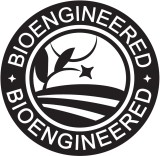
  2. Disclosure Via Symbol. Regulated entities seeking to use a symbol may use a black and white or color version of the following, which includes the word “bioengineered” in an effort to provide more information to consumers in a way that is appropriate and non-disparaging:
  1. Disclosure Via Electronic/Digital Link. Regulated entities choosing to disclose BE content using the electronic or digital link option must accompany the link with the statement “Scan here for more food information” (or equivalent language that reflects technological changes) along with a telephone number and clear calling instructions, i.e., “Call [1-000-000-0000] for more food information,” in close proximity to the link. The telephone disclosure must be available at all times of the day and clearly provide BE food information to the caller. Prerecorded information is permitted. The electronic or digital link must provide the bioengineering disclosure on the first product information page accessed through the link, without any marketing and promotional information.
  2. Disclosure Via Text Message. Regulated entities that choose this option are required to include a statement on the package that instructs consumers on how to receive a text message. Those instructions can be shared or centralized among regulated entities, if so desired. Industry is not prohibited from developing a standardized instruction or response if it is in compliance with the NBFDS regulations.
The rule also provides options for disclosure in certain special cases:
  1. Additional Disclosure Options for Small Food Manufacturers. AMS provides small food manufacturers, defined as a “food manufacturer with annual receipts of at least $2,500,000 but less than $10,000,000,” with two additional disclosure options for the product label: (1) a telephone number accompanied by appropriate language, e.g., “Call [1-000-000-0000] for more food information”; or (2) an Internet website address, e.g., a URL, with accompanying text, e.g., “Visit [URL of the website] for more food information.”
  2. Additional Disclosure Options for Small and Very Small Packages. For small and very small packages, defined using FDA’s labeling requirements, regulated entities can replace the statement “Scan here for more food information” associated with a link disclosure with the statement “Scan for info.” For the text message, entities can replace the statement “Text [number] for more bioengineered food information” with “Text [number] for info.” For very small packages, regulated entities may use a label’s preexisting URL or telephone number for disclosure.
  3. Disclosure for Food Sold in Bulk Containers. AMS holds retailers responsible for complying with the BE food disclosure for bulk food. The disclosure must appear on signage or other materials (stickers, bindings, etc.) on or near the bulk item. Entities can use any of the options for disclosure including text, symbol, electronic or digital link, or text message (if applicable).
In response to a comment requesting an alternative website disclosure option, AMS indicated that, while it does not have the authority to require such a disclosure, regulated entities are free to include BE disclosures on their websites.
Voluntary Disclosure
AMS agrees that voluntary BE disclosure is permissible under the Act, and the rule makes voluntary disclosure available to exempt entities and to foods in which rDNA material is not detectable but which are derived from BE crops or foods.
Entities that are otherwise exempt from the requirements of the NBFDS (very small food manufacturers, and restaurants and similar retail food establishments) may voluntarily provide disclosure of BE food that would otherwise be subject to disclosure under the NBFDS. In order to provide consistency with mandatory disclosure requirements and avoid consumer confusion, voluntary disclosure must be in one or more of the forms specified in the rule for mandatory disclosure (i.e., text, symbol, digital or electronic link, text message, or appropriate small manufacturer and small or very small package disclosure options, as applicable).
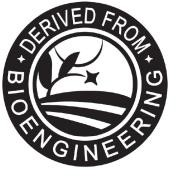
For those foods or food ingredients that (A) do not meet the definition of “bioengineered food,” (B) are not exempt from disclosure under the rule, and (C) are derived from a food on the List (described in Part 1), regulated entities may disclose such foods with one of the BE disclosure options described in the rule (text, symbol, electronic or digital link, text message, or appropriate small manufacturer and small or very small package disclosure options, as applicable). Such voluntary disclosures must state either that the food is “derived from bioengineering” or contains “ingredient(s) derived from a bioengineered source,” although “ingredient” may be replaced with the name of the specific BE crop or ingredient or may use the designated voluntary disclosure symbol.
Voluntary BE disclosure is prohibited for foods that are exempt from mandatory disclosure. For example, a regulated entity could not voluntarily disclose BE content for organic foods or for foods whose BE content falls below the 5 percent inadvertent presence threshold, or for foods that are derived from animals fed BE feed (and are not otherwise subject to disclosure).
Absence Claims
AMS received a number of comments with respect to claims regarding the absence of bioengineering in food. In response, AMS notes that while the NBFDS covers mandatory and voluntary BE and BE-derived claims, the Act does not provide authority for AMS to establish an absence claims regime as part of the NBFDS. AMS also notes that FDA and, for certain products, USDA’s Food Safety Inspection Service retain authority over absence claims and that “[e]ntities seeking to use absence claims should ensure that such claims are in compliance with all applicable Federal laws and regulations and are otherwise truthful and not misleading.” Finally, while foods certified under the National Organic Program are exempt from the BE disclosure requirement, AMS states that the Act does not give the Agency the “authority to establish or align the NBFDS with a non-GMO label.”
AMS acknowledges that entities may participate in voluntary labeling initiatives such as the non-GMO Project so long as they are in compliance with all applicable Federal laws and regulations. To the degree possible, USDA has tried to minimize the impact the NBFDS will have on these voluntary absence claims. AMS acknowledges that some elements of the NBFDS may differ from requirements of some existing voluntary marketing claims. The Agency also notes that it has adopted the statutory definition of “bioengineering,” thereby exempting from disclosure foods such as refined products that have undergone processes that remove modified genetic material.
Other Claims
AMS repeatedly states that nothing in the rule prohibits regulated entities from providing additional statements or other claims regarding BE foods and BE food ingredients provided such statements are consistent with all applicable laws and regulations.
Recordkeeping
The rule provides regulated entities with significant flexibility with respect to recordkeeping, requiring maintenance of records that are “customary or reasonable” to demonstrate compliance. Such entities must maintain records for at least two years beyond the date the product is sold or distributed for retail sale. Entities must respond to AMS requests for records by providing records within five (5) business days of the request, unless AMS extends the deadline. AMS will provide prior notice of at least three (3) business days in advance of on-site inspections. Entities must provide AMS access to facilities necessary for records examinations.
Enforcement
The rule provides a process for any interested person with knowledge of a possible violation to file a statement or complaint with AMS. AMS may enforce compliance through an investigation that includes records audits and examinations or similar activity, either on its own initiative or in response to a complaint from a third party. If the entity that is the subject of such an investigation objects to any findings made by AMS, it may request a hearing in accordance with the rule. If the entity subject to the investigation does not request a hearing, or at the conclusion of a hearing and any subsequent revision of the findings made by AMS, the Agency will make the summary of the final results of the investigation public. The decision to make that summary public constitutes final agency action for purposes of judicial review. AMS does not have authority to issue civil penalties for violations.
The published version of the final rule and preamble (63 pages) can be accessed here:
About The Author:
Karen Ellis Carr is a partner at Arent Fox. She focuses her food and agriculture practice on regulatory counseling and litigation related to products regulated by USDA, EPA, and FDA. Carr works on issues related to biotechnology and other agricultural technologies, pesticides, food safety, advertising, and labeling, and environmental law. In addition to her work with individual companies, Carr has represented a number of industry associations on development and coordination of regulatory strategy, in litigation, and on federal and state legislative issues. She has first- and second-chaired matters in state and federal trial and appellate courts throughout the country and in arbitration and mediation, and has experience in all phases of litigation from pre-litigation strategy and counseling to settlement negotiation and appeals.


quarta-feira, novembro 14, 2018

AMA seeks warning labels for foods with high added sugar content


California voters overwhelmingly approved a measure (Proposition 12) on November 6 that requires stricter animal During the 2018 American Medical Association (AMA) Interim Meeting, held November 8–13, delegates adopted a new policy aimed at increasing consumer awareness of the amount of added sugars, as well as the type of allergens, in food products. Specifically, the AMA is urging the U.S. Food and Drug Administration (FDA) to develop front-of-package warning labels for foods that are high in added sugars based on the established recommended daily value. The policy also encourages the FDA to limit the amount of added sugars allowed to be included in food products that also make claims about health or nutrient content on the front of their packages.
According to the AMA, many front-of-package food labels that make health claims about a particular nutrient are often placed on products that contain added sugars that are above the daily recommended value as outlined in the 2015–2020 U.S. Dietary Guidelines for Americans. The association believes that these nutrient claims may lead consumers to think a product is healthy despite the product’s level of added sugar.
Under the new policy, the AMA is also encouraging food manufacturers to pursue more obvious packaging distinctions between products that contain the most common food allergens identified in the Food Allergen Labeling and Consumer Protection Act and products that do not contain these allergens.
“The AMA believes that food packaging should include more transparent information about the contents within our food, so the healthy choice can be the easy choice for consumers,” said Albert J. Osbahr, III, a member of the AMA board of trustees. “When consumers have access to the amount of sugar they are consuming, they may choose foods with less sugar—which can help prevent debilitating chronic medical conditions, such as type 2 diabetes and heart disease which affect millions of Americans.”
The AMA has existing policy to ensure Americans better understand the actual amount of sugar contained in the foods they consume, including policy in support of the FDA’s decision to include added sugars on nutrition labels.

sb@icab.cat

W

quinta-feira, janeiro 25, 2018

Cómo abordar [la] FSMA (USA) sin preocupaciones


● “Las 3 razones principales por las cuales usted necesita adquirir conocimiento sobre [la] FSMA”: http://saberalimentario.aibonline.org/saber-alimentario/2017/1/6/sugerencia-de-la-semana-fsma?rq=FSMA  


● “5 Preguntas respondidas sobre [la] FSMA por los expertos de AIB (Parte 3)”: http://saberalimentario.aibonline.org/saber-alimentario/2018/1/23/5-preguntas-respondidas-sobre-fsma-parte-3?rq=FSMA  

● “La guía actualizada de [la] FSMA refleja las nuevas reglas finales!”: http://saberalimentario.aibonline.org/saber-alimentario/2016/8/3/guiafsma?rq=FSMA   

● “Siete maneras en las que los cambios en las regulaciones de los Estados Unidos están impactando a los Exportadores”: http://saberalimentario.aibonline.org/saber-alimentario/2016/9/29/sietemaneras?rq=FSMA


● “Cinco aspectos que usted debe considerar antes de exportar sus productos a los Estados Unidos”: http://saberalimentario.aibonline.org/saber-alimentario/2016/11/14/cinco-aspectos?rq=FSMA